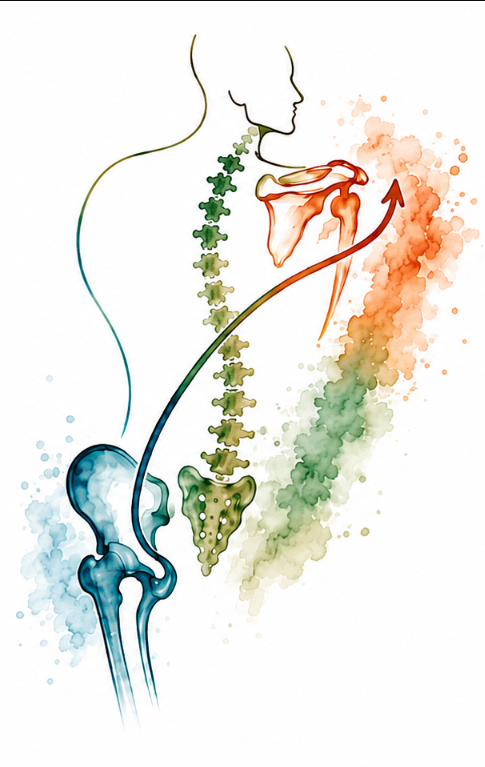
Health is not simply the absence of pain.
The body is continually adapting to the forces placed upon it. Every compensation creates a contrast—between mobility and restriction, stability and movement, tension and ease. These contrasts are not random; they are the body's way of adapting to maintain function. Over time, however, those adaptations may become less efficient, and symptoms can develop.
The name Contrast Osteopathy reflects more than these adaptations—it also represents the philosophy and methodology of osteopathic assessment.
Osteopathy is a science of relationships. Rather than viewing each structure in isolation, it seeks to understand how one part of the body influences another. Every assessment is built on comparison: left and right, above and below, movement and restriction, cause and effect. By recognizing these contrasts, osteopathic treatment aims to identify the patterns that have developed throughout the body rather than focusing solely on where symptoms are experienced.
I believe that every adaptation has a reason. By understanding why the body has adapted the way it has, treatment can restore balance, improve function, and create an environment that supports the body's natural ability to adapt and heal.
Osteopathic treatment is a holistic, hands-on approach that assesses how your body is organized and functions under the demands of everyday life. The body is designed to adapt to physical stress through compensation. However, when it can no longer compensate effectively, restrictions and dysfunction may develop.
By identifying and addressing these restrictions, osteopathic treatment aims to improve the body's ability to distribute forces efficiently, promote optimal movement, function, and support the body's natural capacity to adapt.
Osteopathy Canada (OSTCAN) is a national organization representing qualified osteopathic manual practitioners across Canada. Its members are committed to maintaining the highest standards of education, clinical competency, and professional practice.
To become a member, practitioners must complete a minimum of 4,200 hours of osteopathic education, including at least 1,000 hours of supervised clinical training. These educational standards are recognized by the World Health Organization (WHO), providing patients with confidence that they are receiving care from a highly trained and competent practitioner.
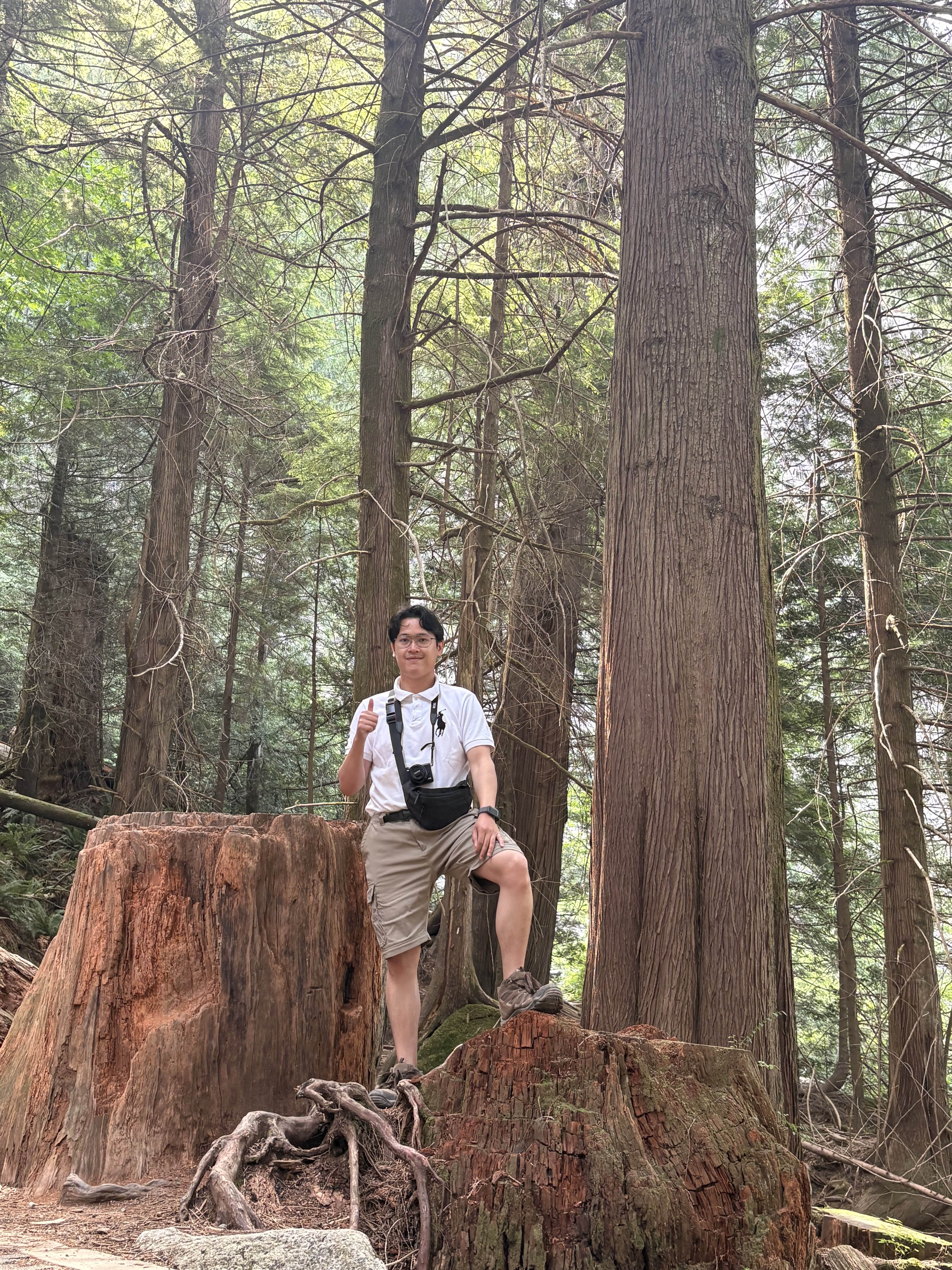
Meet Adriel David, M.OMSc
Osteopathic Manual Practitioner - OSTSCAN member - CAO graduate
My name is Adriel David, and I am an Osteopathic Manual Practitioner (OMP). I graduated from the Canadian Academy of Osteopathy (CAO) in 2026 after completing over 4,200 hours of education and clinical training. Prior to studying osteopathy, I graduated with Honours from the University of Calgary in 2022 with a Bachelor of Kinesiology.
My passion for understanding health first led me to kinesiology, where I developed a strong foundation in human anatomy, biomechanics, and movement. During my studies, I had the opportunity to volunteer with individuals with special needs and older adults, guiding them through individualized exercise programs. These experiences deepened my appreciation for helping people improve their quality of life and inspired me to pursue a clinical career focused on patient care.
During my final year of kinesiology, I was introduced to osteopathy by a student from the CAO. I was immediately drawn to osteopathy's holistic philosophy, which recognizes the body as a dynamic unit in which structure and function are closely interconnected. Rather than viewing symptoms in isolation, osteopathy seeks to understand how different areas of the body influence one another. I believe the body is remarkably intelligent and that there is always a reason why it adapts and presents the way it does. By identifying and addressing areas of restriction, we can help restore balance and create an environment that supports the body's natural ability to adapt and heal.
What continues to inspire me about osteopathy is its ability to facilitate meaningful, lasting change through precise, gentle manual treatment. Every patient is unique, and my goal is to understand your individual story, listen to what your body is communicating, and provide thoughtful, patient-centered care. My mission is to help restore optimal function so you can move, feel, and live with greater ease. Learning the craft never stops and I continually put effort into deepening my understanding of the human body so I can provide the highest quality of care for my patients.